
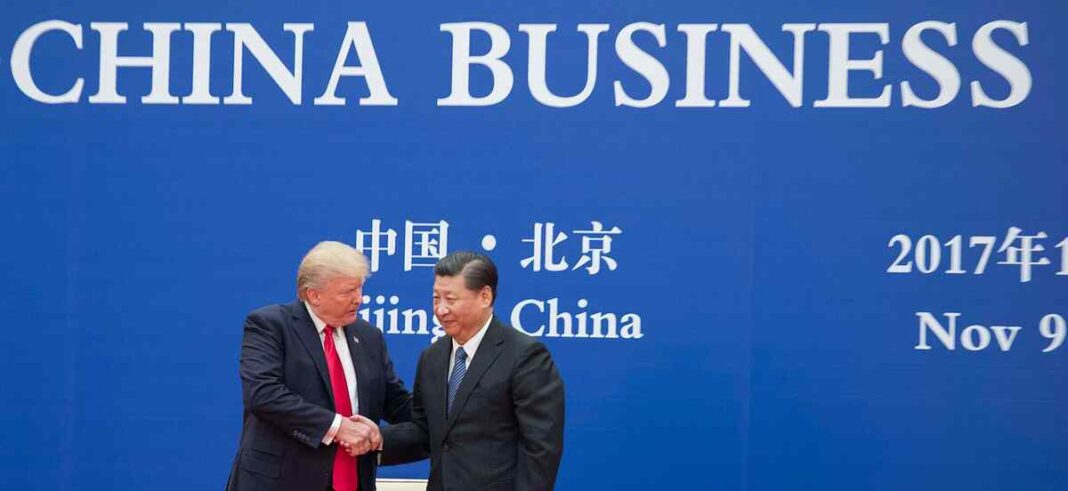
The much-anticipated summit between U.S. President Donald Trump and Chinese President Xi Jinping has been thrown into uncertainty, creating fresh tension in one of the world’s most important economic relationships. What was expected to be a defining diplomatic moment is now delayed, with both nations continuing trade negotiations in Paris while navigating a rapidly shifting geopolitical landscape.
Originally scheduled for late March, the Beijing summit has been pushed back by several weeks, largely due to escalating global tensions and shifting priorities in Washington. The ongoing conflict involving Iran has forced the U.S. administration to redirect its focus toward military and energy concerns, leaving less room for high-level diplomatic engagement with China.
Despite the delay, talks between U.S. and Chinese officials have not stopped. Negotiators from both sides have been meeting in Paris to discuss key trade issues, including agricultural exports, rare earth minerals, and broader economic cooperation. These discussions are seen as groundwork for the eventual summit, though the lack of a confirmed date has added uncertainty to the process.
The postponement comes at a sensitive time for both economies. After years of tariffs, trade restrictions, and political friction, the two countries had reached a fragile truce that stabilized relations. The summit was expected to build on that progress and potentially open the door to a more structured agreement. Now, with the meeting delayed, there are growing concerns about whether that momentum can be maintained.
One of the major complications lies in the broader geopolitical environment. The disruption of global oil supply routes and rising energy prices have added new pressure on policymakers. The Strait of Hormuz, a critical artery for global trade, has become a focal point of tension, with the U.S. urging international partners, including China, to help secure shipping routes. Beijing, however, has taken a more cautious stance, calling for diplomacy rather than direct involvement.
From China’s perspective, the delay presents both risks and opportunities. On one hand, it disrupts carefully planned diplomatic efforts aimed at projecting stability and economic strength. On the other, it provides additional time to prepare for negotiations and assess the shifting global environment. Analysts suggest that while the delay is not ideal, it may allow both sides to arrive at the table with more concrete proposals.
For the United States, the situation is equally complex. Domestic political pressures, combined with rising inflation driven by energy costs, are shaping the administration’s approach to trade. Securing a favorable deal with China could provide an economic boost, but the current geopolitical climate makes such an outcome harder to achieve.
Financial markets are already reacting to the uncertainty. Investors are closely watching developments, as any shift in U.S.-China relations can have wide-ranging effects on global trade, supply chains, and economic stability. The delay has introduced a level of unpredictability that markets typically struggle to absorb.
At its core, the situation highlights how interconnected global issues have become. Trade negotiations are no longer isolated economic discussions but are deeply influenced by political, military, and energy-related factors. The Trump-Xi summit, once seen as a straightforward diplomatic event, is now entangled in a broader web of international challenges.
Looking ahead, both sides remain publicly committed to dialogue. Officials have confirmed that communication is ongoing and that the summit will eventually take place, likely in the coming months. However, the success of that meeting will depend heavily on how current tensions evolve.
The delay of the Trump-Xi summit is more than just a scheduling issue. It reflects a shifting world order where economic negotiations are increasingly shaped by global crises. As trade talks continue behind closed doors, the outcome will not only define U.S.-China relations but also influence the direction of the global economy in the months ahead.